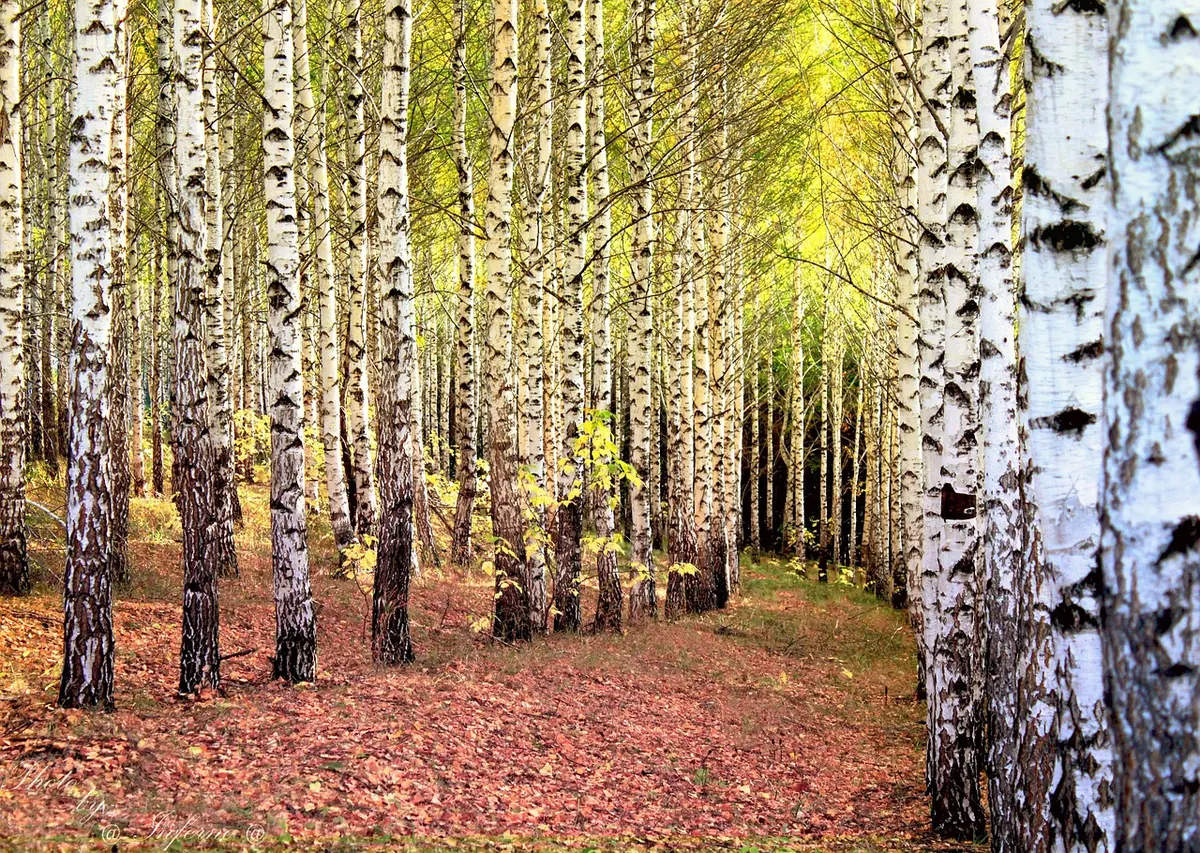
A birch in June should be a green curtain in motion, all shimmer and light. So when the leaves start to yellow in July, it reads as a small emergency. It usually is. Birches are quick, thirsty, shallow-rooted trees, and a roadside verge is about the least birch-friendly place we can put one. They grow fast, they lose water fast, and they show the consequences earlier than an oak or a lime would. That makes them honest indicators — and it makes your job, as the person who noticed, a bit easier.
The useful question is not "what is wrong with my birch" but "which of four things is wrong with it." Yellowing is a symptom with several employers: drought, salt, soil compaction, and pests. They overlap, and a street tree often has two or three at once. Still, the pattern of the yellowing, its timing, and where you find it in the crown will point you in the right direction before you spend a penny on treatment.
Read the Pattern Before You Read the Colour
Yellow is not a diagnosis. Where the yellow sits on the tree tells you more than the shade of it.
Yellowing that starts low and inside the crown, on older leaves nearest the trunk, usually points down to the roots: water shortage, compaction, salt accumulation. Yellowing at the outer tips and top of the tree points upward, to light, exposure, or a crown that is beginning to die back. A tree that yellows on one side only, usually the side facing the carriageway, is telling you about salt spray, reflected heat from a wall, or root damage on that flank.
Timing matters just as much. A birch that turns in a week, right after a dry spell or a heatwave, has suffered an acute event. One that has been thinning and yellowing for three summers in a row is living with a chronic problem. And check the calendar: a few yellow leaves in the crown is normal leaf shed in a long dry August. A third of the canopy going pale in early July is not.
Drought: The Usual Suspect
Birch roots run shallow and wide, spreading through the topsoil rather than driving deep for reserves. That works beautifully in a damp woodland edge. Under a pavement, with a kerb, a road and a summer of thirty-degree days, it is a liability. Rain that lands on hard surfaces runs into the drains, not into the soil, so a roadside birch can be genuinely parched while the street looks modestly damp.
Look for leaves that are smaller than usual and yellowing evenly rather than in patches, often with dry, slightly curled edges. The tree may drop them early, sometimes in the middle of summer, leaving a thin crown on a mature tree. Push a finger into the soil 10 cm down. If it is dust and crumbs, you have your answer.
Watering a street tree is mostly about doing it properly rather than often. A quick sprinkle wets the surface and evaporates. Instead:
- Water slowly at the drip line, not against the trunk, letting it soak in rather than run off.
- Give a young tree a genuine soak — a couple of buckets poured slowly, or a hose on a low trickle moved around the root zone — once or twice a week during a dry spell.
- Water in the evening so less is lost to evaporation.
- Add a mulch layer of 5–8 cm of bark or leaf mould over the root zone, keeping it clear of the trunk itself.
One hard truth: leaves that have already turned yellow will not turn green again this season. Watering now is about next spring's buds and root reserves, not about rescuing this year's canopy.
Road Salt and the Splash Zone
De-icing salt does not disappear in April. Sodium and chloride accumulate in the soil and sit there, and the chloride is taken up by the roots in spring, where it burns leaf tissue. The first sign is often a brown or yellow margin on the leaf, working inward, with a yellow halo behind it. New growth comes out small and sparse. The damage is worst on the road-facing side of the tree and worst in the lower crown, where splash lands.
Salt symptoms usually declare themselves in spring, but a salt-loaded tree heads into summer with less root capacity and fewer reserves, so drought then hits harder. The two together are what flatten a verge planting.
There is little point trying to wash salt out of a street tree's soil in a drought; leaching needs a lot of water, and you would be pouring your drought ration down the drain. Practical measures belong earlier in the calendar: use grit or sand rather than salt where you have a choice, avoid piling snow from salted roads onto the verge, and, if you are replanting a verge, keep salt-sensitive trees a sensible distance back from the kerb and put something tolerant in the front rank.
Compacted Soil and the Root Space Problem
A birch on a wide verge with bare soil will outlive a birch in a one-metre tree pit almost every time, and compaction is the reason. Roots need air as much as water. When soil is pressed flat by foot traffic, parked cars, deliveries and years of use, the pore spaces collapse, water runs off instead of soaking in, and roots slowly suffocate.
The symptoms look a lot like drought — small leaves, thin crown, general yellowing — but with a few extra clues. Dead twigs appear at the top of the tree. Growth is poor year on year rather than suddenly bad. Water pools on the surface or streams away. And the ground itself is the giveaway: when the soil is moist, a screwdriver or a thin metal rod should push in with modest effort. If it stops dead at two centimetres, nothing is going to grow well there.
Fixes are slow but real. Mulch the root zone generously and keep it mulched. Fence or mark tree pits so vehicles stay off. Never raise soil level over the root flare — burying the base of the trunk is its own slow death sentence. For a tree you care about, an arborist can decompact with an air spade or vertical mulching, which fractures the soil without destroying roots.
Yellow leaves in July are rarely a disease. They are a message about water, air or salt — usually all three.
Pests and Diseases: Often the Passenger, Not the Driver
Birches do get pests, and it is worth knowing them so you do not misread the signs. But most of what you find on a yellowing street birch is taking advantage of a tree already under stress. Fix the water and the soil, and the insects usually stop mattering.
- Birch leaf miner. Pale blotches and winding tunnels inside the leaf, with leaves looking faded and papery. On an established tree this is largely cosmetic; it looks worse than it is.
- Aphids. Sticky honeydew on the leaves and the pavement beneath, sooty black mould, and yellowing, curling foliage. Unpleasant, but rarely fatal.
- Birch rust. Small orange-yellow spots or pustules, most visible on the leaf undersides in late summer. Common in wet years and usually tolerated.
- Dieback and canker. Dead twigs and branches in the crown, bark cracks, sometimes dark weeping patches. This one is serious, and it tends to follow years of stress.
- Wood-boring insects. Rarely the first arrival. They find trees that are already failing, which is why a birch with dieback and yellowing deserves a professional look.
Turn leaves over. Look at the undersides, especially in the evening, and at the inner canopy rather than the showy outer twigs. A hand lens helps. If you find nothing but a tree that is dry and standing in hard ground, believe the soil over the search for a culprit.
A Ten-Minute Field Diagnosis
Work through this in order before doing anything else. The first three questions usually settle it.
- Which side? Road-facing only suggests salt or reflected heat. Uniform all round suggests roots.
- Which leaves? Inner and lower first suggests water, salt or compaction. Outer and top first suggests exposure or dieback.
- What is the pattern on the leaf? Scorch and browning from the margins inward — salt. Even yellowing with small leaves — drought. Blotches and tunnels — leaf miner. Spots — rust.
- Test the soil. Push a rod in when moist. Crumbly and penetrable is good; brick-hard is compaction.
- Dig down 10 cm. Dust means drought. Damp soil with a yellowing tree means look elsewhere.
- Check the leaf undersides for insects, webbing, pustules or sticky residue.
- Think back over the last two years. Roadworks, a new driveway, a trench, a harsh salting winter, a summer of hosepipe bans.
What to Do This Weekend
Start with water and mulch, because they are cheap, they help in almost every scenario, and they do no harm if you have guessed wrong. Soak the root zone properly, then mulch it. Keep vehicles and strimmers off the base of the tree. Prune out dead wood only — do not cut into live growth to "balance" a thin crown, since a stressed birch has little energy to spare.
Hold off on high-nitrogen fertiliser. Pushing soft new growth onto a drought-stressed or salt-loaded tree usually makes things worse; if you suspect a genuine nutrient deficiency, get the soil looked at first rather than guessing with a bag. And if more than a quarter of the crown is affected, or you can see dieback running down branches, bring in a qualified arborist for an on-site assessment. Photographs taken now, and again in four weeks, will help them no end.
One last, honest note. Some roadside birches are in positions no tree should have been asked to occupy: a metre of compacted ground between a kerb and a wall, salted every winter. If yours has been declining for years, the kindest plan may be to enjoy it while it lasts and choose something more tolerant for the replacement — and to give that one a proper tree pit, mulch and a fighting chance.
Photo: 9891090 / Pixabay